I have started listing a huge game collection...check all of my listings...Many 1 of a kind...
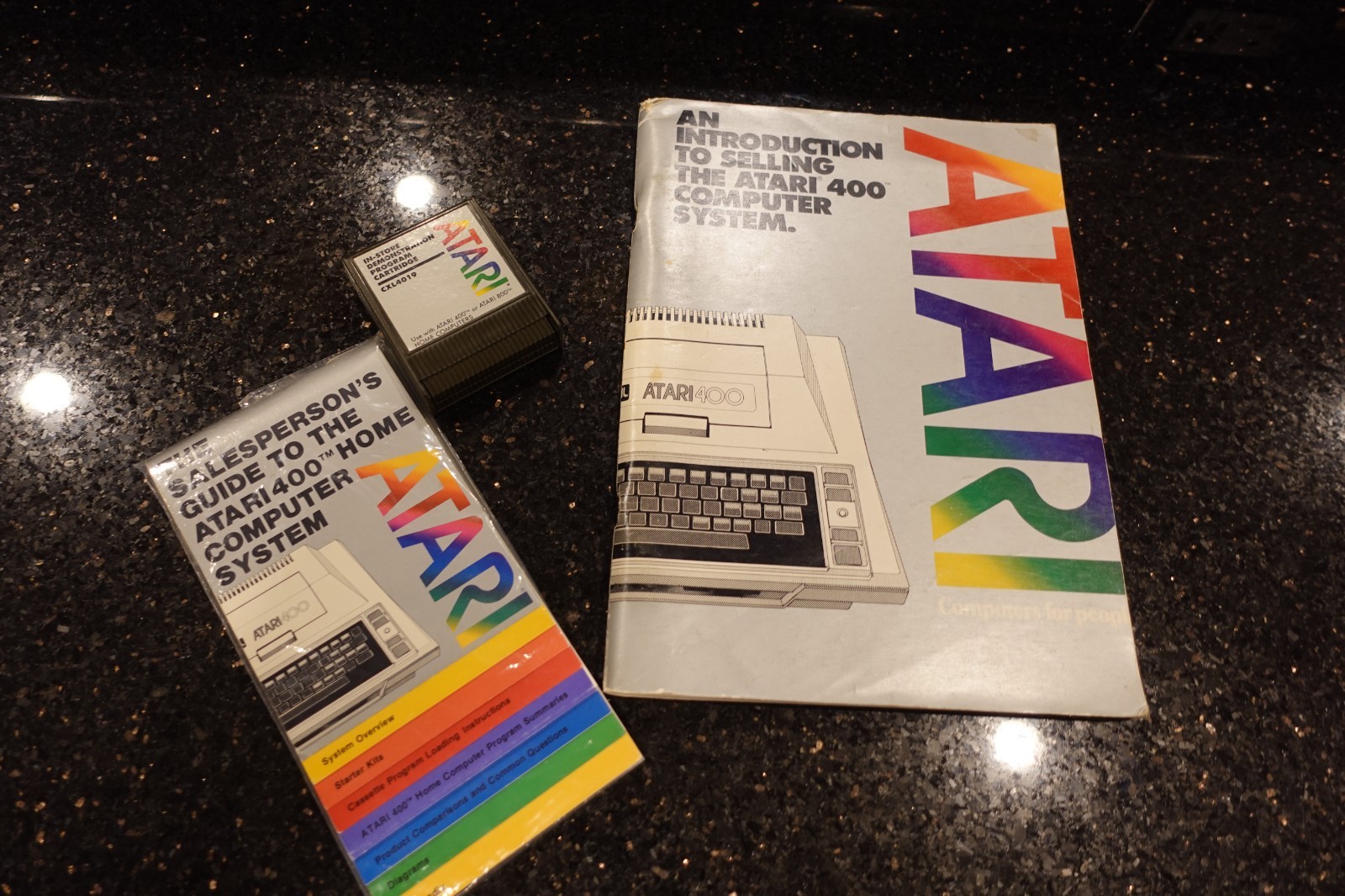
By the dawn of the 1980s, Atari wasn’t satisfied with dominating the video-game conversation—it was coming for the home computer market. The Atari 400 and 800 brought that unmistakable Atari magic into American homes, combining games, education, programming and serious computing in a package that looked like the future had arrived early. Atari pushed these machines hard through retailers, demonstrations and trained salespeople—and THAT is what makes this group so extraordinary. This isn’t another joystick, cartridge or consumer manual. These are the tools Atari put into the hands of the people whose job was to SELL the Atari computer revolution. This incredible group came from an Atari salesperson, and after decades around vintage Atari material, I have never seen these pieces together before.
First is the spectacular “The Salesperson’s Guide to the ATARI 400 Home Computer System.” Look closely at this thing—it is an ingenious fold-out, color-tabbed pocket reference designed specifically to help a salesperson explain and sell the Atari 400. Sections include System Overview, Starter Kits, Cassette Program Loading Instructions, Atari 400 Home Computer Program Summaries, Product Comparisons and Common Questions, Diagrams and Appendix. Open it up and you see illustrations of the Atari 400, joysticks, program recorder, printer, cartridges, BASIC, educational packages, communications equipment and accessories. This was not something a kid brought home from the toy store. This was behind-the-counter sales ammunition, designed to give an Atari salesperson instant answers while standing in front of a customer. The colorful rainbow Atari graphics alone make it a fantastic display piece.
Then comes what may be the wildest piece in the group: the genuine ATARI “IN-STORE DEMONSTRATION PROGRAM CARTRIDGE” CXL4019, clearly marked for use with Atari 400 or Atari 800 Home Computers. Think about what that means. This was not a normal retail game cartridge sitting on the shelf waiting for a child to buy it—it existed to demonstrate Atari computers inside the store and help close the sale. Even the label screams early Atari with the rainbow logo and dedicated “IN-STORE DEMONSTRATION PROGRAM” wording. Turn it over and you get the classic Atari/Warner Communications branding. For the collector who already owns the usual production cartridges, this is the type of internal retail artifact that takes an Atari display from good to museum-level.
And then there is the centerpiece: the large “AN INTRODUCTION TO SELLING THE ATARI 400 COMPUTER SYSTEM” salesperson training manual. This is incredible. This isn’t simply explaining how to plug in the computer—it is teaching someone how to sell it. The contents include modules covering Introduction to the Computer, Typical Uses for the System, Maintaining Your Display, Communicating With Your Customers, plus an appendix. Inside are wonderfully period Atari illustrations, selling points, display instructions, customer explanations, programming information and even humorous cartoons designed to keep the salesperson engaged. One page literally drives home the mission: “So quit bellyaching! Get out there and sell some COMPUTERS!” That one page tells the whole story. This document takes you directly inside Atari’s retail sales machine at the moment the company was trying to convince America that a computer belonged in every home.
Now put all three pieces together: the salesperson training manual, the pocket salesperson reference guide AND the in-store demonstration cartridge. Individually these are rare pieces of Atari retail history. Together they tell the COMPLETE STORY—learn how to sell it, carry the reference material, then demonstrate the machine to the customer. This is not just Atari memorabilia; it is a surviving snapshot of how Atari actually sold the 400/800 computer line from the inside. You can buy Atari games every day.
You will NEVER see this set again.
Don’t let this chance pass you by. Own it.
NOTE...You may see a number and a letter in the Title like "A1" this is a label for me telling me the location of the game in my house so I can find it quickly amongst all of the games listed. Thank you