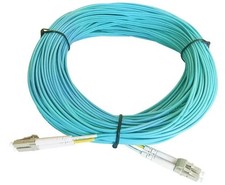
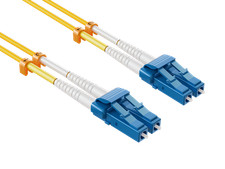
25m LC to LC Short Boot Single Mode Fiber Patch Cable, OS2 9/125 Duplex Corning, LSZH/OFNR, Yellow
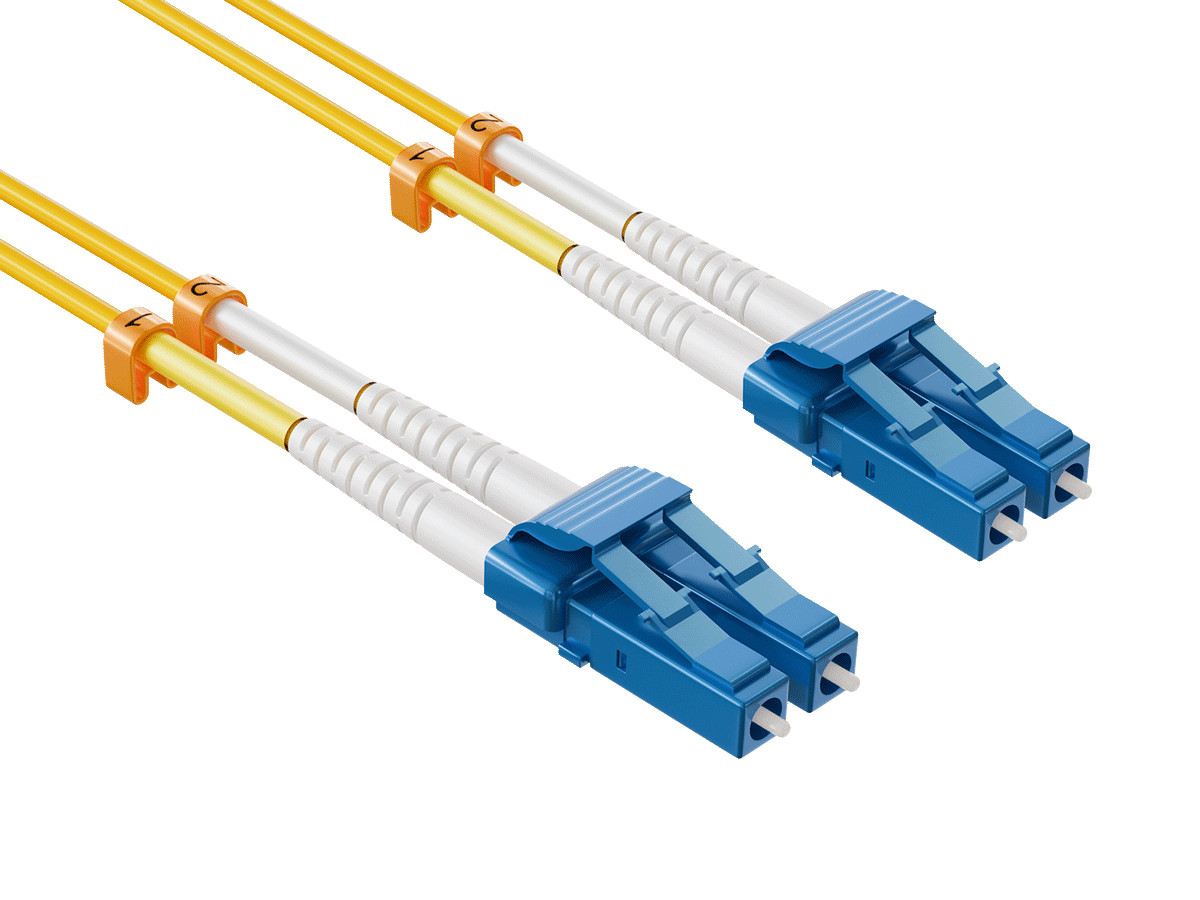
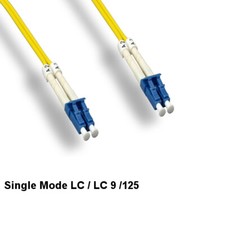
The CableLeader FB131-91XX is an OS2 single mode duplex fiber patch cable terminated with short boot LC/UPC connectors on both ends. The 19.5 mm boot — visibly shorter than a standard LC boot — reduces the clearance a cable needs behind the port, which matters when 24 or 48 LC ports sit side by side on a 1U switch or a loaded fiber patch panel. Inside the yellow zipcord jacket run two Corning 9/125 um G657A1 fibers, wired straight through for duplex transmit-and-receive links between optical transceivers.
The G657A1 fiber grade is the working difference between this cable and older single mode cordage. Rated bend insensitive, it tolerates the tight routing radii found in cable managers, vertical rings, and slack spools without the attenuation spikes that standard G652D fiber shows under the same treatment. G657A1 remains fully compatible with G652D infrastructure, so this patch cable drops into existing OS2 structured cabling, splice trays, and outside-plant terminations without link-budget surprises.
Optical performance is factory-verified on every assembly. Each LC/UPC ferrule is polished and tested to a maximum insertion loss of 0.30 dB and a minimum return loss of 55 dB, measured at both 1310 nm and 1550 nm operating windows. Those figures leave headroom in the loss budget of typical single mode links — whether the run feeds a 1G SFP optic in an access switch, a 10G SFP+ uplink between buildings, or a passive optical network drop toward ONT hardware.
The jacket is LSZH/OFNR rated under UL file E510298. Low-smoke zero-halogen material limits toxic emissions in enclosed equipment rooms, while the OFNR riser rating permits vertical runs between floors. The 2.0 mm x 4.1 mm duplex zipcord profile stays flexible enough for dense horizontal management yet keeps each fiber leg protected by its own aramid-reinforced sub-unit.
Deployment scenarios concentrate wherever port density or pathway space is tight. Data center technicians patch top-of-rack switches to structured cabling; ISP and telecom installers connect OLT and transport gear inside fiber distribution frames; enterprise network teams link core switches to campus backbone panels; and FTTH integrators finish single mode drops at the customer premises. In every case the short boot buys back the rear clearance that standard boots consume.
Compatibility & Ordering Information — FB131-91XX mates with any standards-compliant LC/UPC port, including SFP, SFP+, and single mode transceiver optics from Cisco, Ubiquiti, MikroTik, Juniper, and TP-Link platforms, plus LC adapter panels, media converters, and ONT equipment. The family is offered in lengths from 0.5 m through 50 m; choose the variant matching your rack-to-panel distance and leave a short service loop. For the standard boot version of the same cable, see the FB102-91XX family; APC-polish and simplex versions are available in the CableLeader fiber optic cables catalog.
Product Comparison: Short Boot vs Standard Boot LC Single Mode Patch Cable
Both cables use identical Corning OS2 9/125 G657A1 fiber and LC/UPC terminations; the choice comes down to the space behind your ports. The table summarizes the decision:
AttributeShort Boot LC to LC (this product)Standard Boot LC to LCBoot Length19.5 mm short bootStandard-length LC bootRear Clearance NeededReduced; cable can bend away closer to the portFull boot depth before first bendBest ForHigh-density 1U switch faceplates, loaded LC patch panels, shallow enclosuresGeneral patching where rear space is not constrainedFiberCorning OS2 9/125 G657A1 bend insensitiveCorning OS2 9/125 (same optical grade available)Optical Performance0.30 dB max IL, 55 dB min RL per connectorIdentical rating; boot length does not affect lossHandlingSlightly less finger grip when unplugging in dense fieldsLonger boot is easier to grip and label
Select the short boot version when ports are dense and rear clearance is tight.
Select the standard boot version for general-purpose patching and easier handling.
FAQ
What is the difference between a short boot and a standard boot LC fiber cable?
A short boot LC connector uses a 19.5 mm boot, shorter than the standard LC boot, so the cable needs less straight clearance behind the port before it can bend away. Optical performance is identical — same 9/125 OS2 fiber, same 0.30 dB insertion loss limit. Choose short boot for dense 1U switch faceplates and loaded patch panels; choose standard boot where clearance is not constrained.
Is this cable compatible with SFP and SFP+ transceiver modules?
Yes. Any single mode SFP, SFP+, or other transceiver with a duplex LC receptacle accepts this cable, including 1000BASE-LX and 10GBASE-LR optics used in Cisco, Juniper, Ubiquiti, MikroTik, and TP-Link equipment. Both ends are LC/UPC; pair the cable with UPC-polish ports and single mode optics — do not mix it with multimode SR transceivers.
What do OS2 and 9/125 mean on a fiber patch cable?
OS2 is the standard designation for low-water-peak single mode cabling used in long-run and outdoor-capable links, and 9/125 describes the glass geometry: a 9 um light-carrying core inside a 125 um cladding. The small core carries a single light mode at 1310/1550 nm, which is what lets single mode links span distances measured in kilometers rather than the hundreds of meters typical of multimode.
How tightly can I bend this cable when routing it?
The Corning G657A1 fiber inside is bend insensitive, designed to tolerate tighter routing than standard G652D single mode fiber without significant added loss. Route it through cable managers and vertical rings normally, avoid kinks and pinch points under cable ties, and leave a small service loop at each end so connectors are never under tension.
Which fiber patch cable should I choose for a 10G link between switches?
For 10G between switches over single mode optics (10GBASE-LR SFP+), use an OS2 9/125 LC to LC cable like this one — it handles 1G and 10G links alike and will not be the limiting factor in the link budget. If your switches instead use multimode SR optics with aqua OM3/OM4 cabling, match that fiber type instead; single mode and multimode cables and optics are not interchangeable on the same link.



![[10X] Kentek 25m LC to LC Single-Mode Fiber Optic Cable 9/125 Duplex Ethernet picture](/store/item/img/g/e3sAAOSwDa5mj4Li/s-l225/-10X-Kentek-25m-LC-to-LC-Single-Mode-Fiber-Optic-C.jpg)