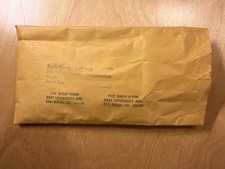
Even AI can't come up with much of a description....
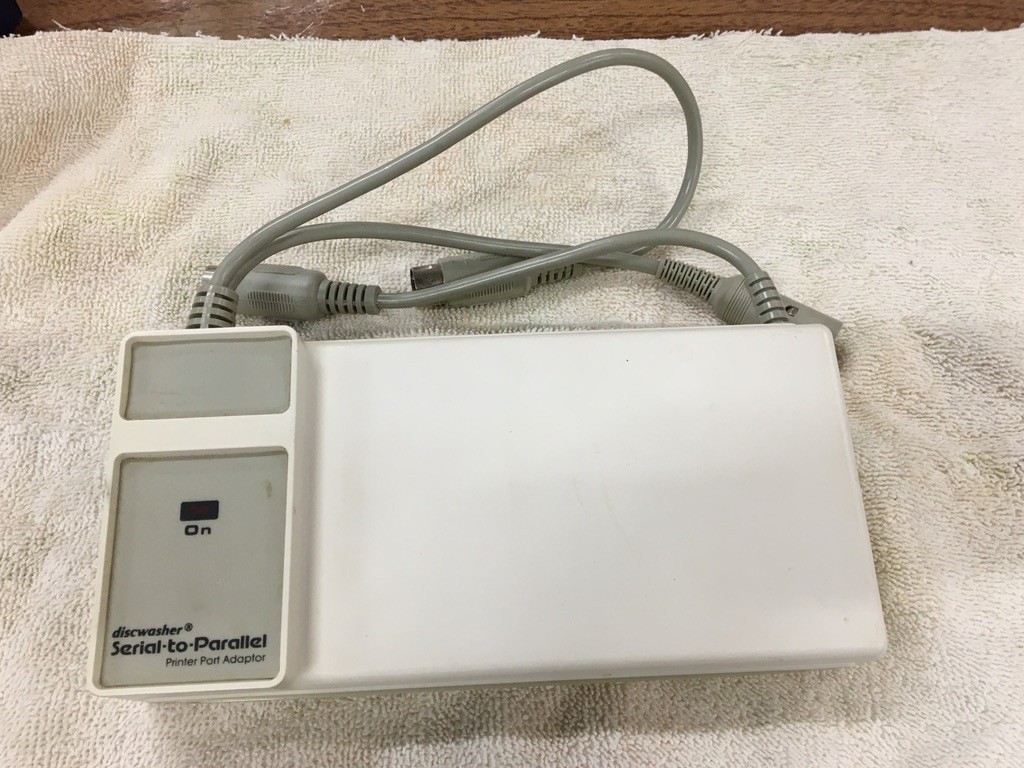
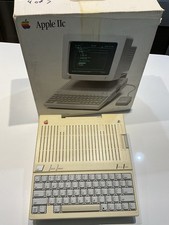
The Apple 2c - discwasher Serial-to-Parallel Printer Port Adapter is a rare and vintage accessory designed for vintage computing systems. Produced by discwasher in the United States, this printer port adapter allows for compatibility between serial and parallel printers, providing a unique solution for connecting older printers to modern systems. Its rarity and vintage status make it a sought-after item for collectors and enthusiasts of vintage computing technology.
==============
What I found online:TheDiscwasher Serial-to-Parallel Printer Port Adapteris a vintage, specialized hardware converter from the 1980s. It was designed to solve a common compatibility issue of the early personal computing era: connecting a computer that only featured a serial port (like certain early Apple, Commodore, or portable computers) to a standard dot-matrix or daisy-wheel printer that required a parallel Centronics interface.Key Purpose & Functionality
- The Problem:Early computers often lacked standard parallel ports (LPT) due to cost or space limitations, leaving users unable to connect standard parallel printers.
- The Solution:The Discwasher hardware adapter received slow, serial data (bit-by-bit) from the host computer, buffered the incoming signal, and converted it into standard 8-bit parallel data (all bits at once) required by the printer's Centronics interface.
- The Brand:While Discwasher is universally famous for its record-cleaning brushes and audio accessories, during the 1980s home computer boom, they briefly diversified into computer peripherals, including data switches, cables, and interface adapters.
Technical Specifications & Setup
- Input Interface:Typically a standard DB-9 or DB-25 female serial connector, which connected via a serial cable to the computer's RS-232 communication (COM) port.
- Output Interface:A 36-pin male Centronics connector that plugged directly into the back of the parallel printer.
- Hardware Configuration:Because serial communication relies on specific speeds, these adapters featured internalDIP switches. Users had to manually toggle these switches to match the computer’s output settings, choosing the correct baud rate (usually 1200 to 9600 bps), parity, and handshaking protocol (such as hardware CTS/RTS or software XON/XOFF).
- Power Source:Unlike modern passive adapters, serial-to-parallel conversion required active circuitry. These devices typically required an external AC power adapter to power the logic chips inside.
- Not sure when or why I have this, but it was in our store... now it's on !
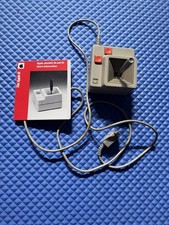
- I'll also include (free) the Belkin do-dad shown in the photos. This stuff is untested and being sold as such...untested.
- Make an offer!
Wayne
"Welcome to Macintosh" movie
the Collector