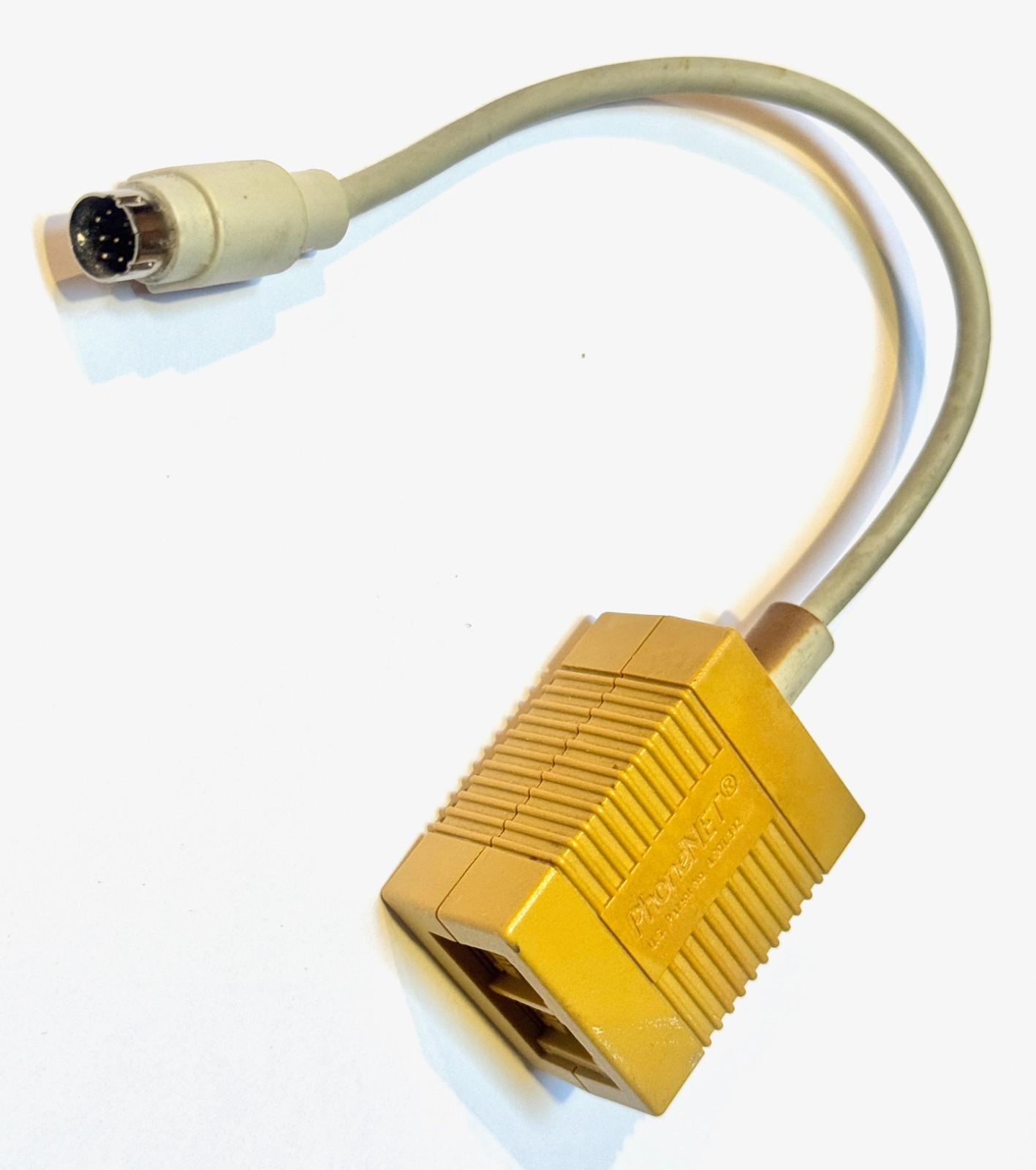
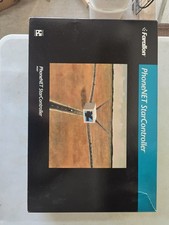
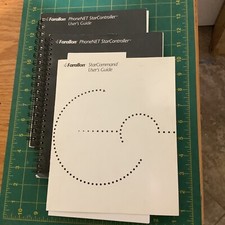
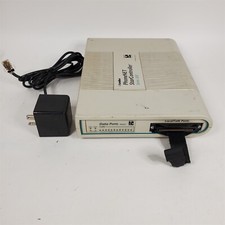
Farallon PhoneNet LocalTalk AppleTalk Adapter (no terminator) 8 pin din connector and RJ-11 modular connector.
Originally released as "AppleTalk Personal Network", LocalTalk used shielded twisted-pair cable with three-pin mini-DIN connectors. Cables were daisy-chained from transceiver to transceiver. Each transceiver had two three-pin mini-DIN ports, and a "pigtail" cable to connect to the Mac's DE-9 serial connector. Later, when the Mac Plus introduced the eight-pin mini-DIN serial connector, transceivers were updated as well.
A variation of LocalTalk called PhoneNET was introduced by Farallon Computing. It used standard unshielded side-by-side telephone wire, with six-position modular connectors (same as the popular RJ11 telephone connectors) connected to a PhoneNET transceiver, instead of the expensive, shielded, twisted-pair cable. In addition to being lower cost, PhoneNET-wired networks were more reliable due to the connections being more difficult to accidentally disconnect. In addition, because it used the "outer" pair of the modular connector, it could travel on many pre-existing phone cables and jacks where just the inner pair was in use for RJ11 telephone service. PhoneNET was also able to use an office's existing phone wire, allowing for entire floors of computers to be easily networked. Farallon introduced a 12-port hub, which made constructing star topology networks of up to 48 devices as easy as adding jacks at the workstations and some jumpers in the phone closet. These factors led to PhoneNET largely supplanting LocalTalk wiring in low-cost networking.