PTM7950 Phase Change Thermal Pad 🔥
Ultra-Low Thermal Impedance for CPU & GPU Cooling
Note: Due to the phase-change nature of this material, the edges may soften or appear slightly melted during transit. This is normal and does not affect performance.Key Features⚡ Ultra-Low Thermal Impedance
Rated at 0.04°C·cm²/W with no shim required, minimizing interface resistance for high-performance CPUs and GPUs.
🌡️ High Thermal Conductivity
8.5 W/m·K conductivity ensures efficient heat transfer between your chip and heatsink.
🛡️ Proven Reliability
Passes 150°C bake for 1000 hours and 1000 temperature cycles (-55°C to +125°C), maintaining stable performance over time.
🔧 Easy Application
Precision-cut pad simplifies installation compared to traditional thermal paste, with consistent 0.25mm thickness.
Choosing Your Option
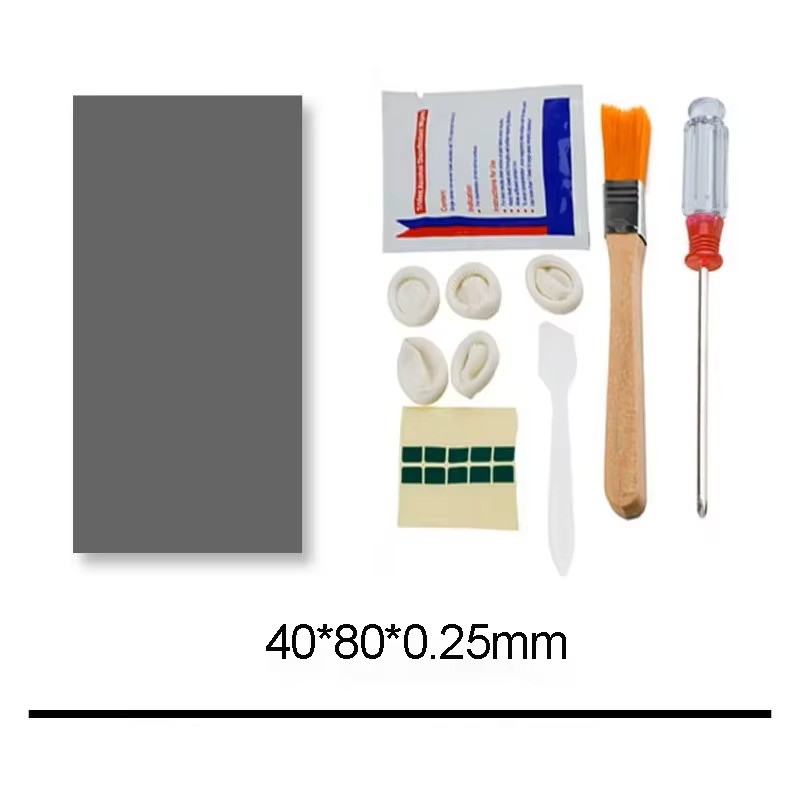
This listing offers the same PTM7950 phase change material cut to different sizes. Each option includes one thermal pad sheet at the selected dimensions:
- 31x50x0.25mm - compact size for smaller chips
- 40x80x0.25mm - mid-size coverage
- 80x80x0.25mm - larger coverage for bigger dies or GPUs
- 100x160x0.25mm - largest sheet, can be cut to fit multiple applications
Product SpecificationsMaterialPTM7950 Phase Change PolymerThermal Impedance0.04°C·cm²/W (no shim)Thermal Conductivity8.5 W/m·KThickness0.25mmReliability150°C bake 1000h, T/C-B 1000 cyclesRecommended Bond LineLess than 1.5 mil (0.038mm)Product ImagesFrequently Asked QuestionsDoes this need to be reheated to activate the phase change?
Yes, the material must pass through its phase change temperature (typically reached during normal CPU/GPU operation) to achieve optimal performance.
Can I reuse this pad after removal?
Once melted and compressed, the pad conforms to the surface. For best results, use a fresh piece if reapplying.
What size should I choose?
Select a size that matches or slightly exceeds your chip's die size. Larger sheets can be trimmed to fit smaller applications.
Is clamping pressure needed?
Yes, proper mounting pressure from your heatsink is recommended to achieve the minimum bond line thickness for best thermal performance.