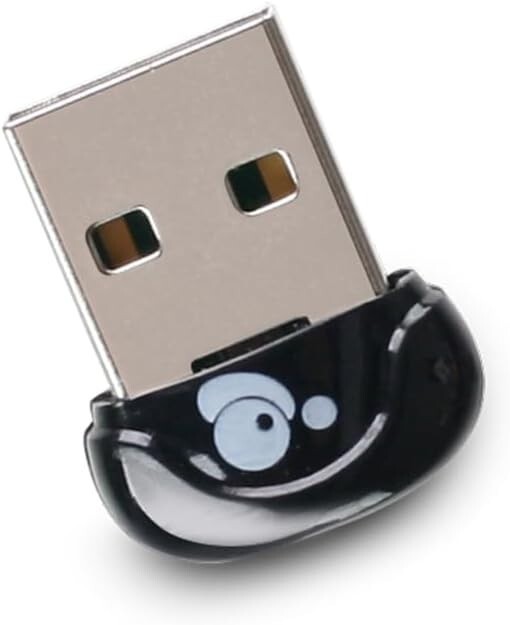
IOGEAR Compact USB Bluetooth 5.1 Transmitter For Sale
When you click on links to various merchants on this site and make a purchase, this can result in this site earning a commission. Affiliate programs and affiliations include, but are not limited to, the eBay Partner Network.
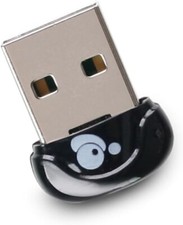
IOGEAR Compact USB Bluetooth 5.1 Transmitter
Price: US $23.94
Bluetooth 5.1 specification compliant
Supports Bluetooth classic (BR/EDR)
Supports Bluetooth Low Energy (BLE)
Single-end RF radio output with Class 1 high performance up to 8dBm
Supports Power Control
Fast AGC control to improve receiving dynamic range
Supports Angle of Arrival (AOA) application
Upgrade to Bluetooth® 5.1 Technology - Stable and Reliable ConnectionsIOGEAR's new Compact USB Bluetooth Transmitter is 5.1 compliant. New 5.1 technology brings “direction-finding” that allows Bluetooth devices to precisely pinpoint the physical location of the device. 5.1 supports Angle of Arrival (AoA) and Angle of Departure (AoD) methods to determine the distance and direction of the signal. This new version can pinpoint a device's location within a few centimeters. This offers a more stable and reliable connection.Speed Up the Pairing ProcessBluetooth 5.1 devices use “Generic Attribute Profile,” or GATT. When a client device connects it “discovers” what the server device supports, which takes time and energy. Bluetooth 5.1 performs more aggressive caching it skips the service discovery stage if nothing has changed. These “GATT caching enhancements” mean the connection happens faster and less power is spent.Less Bluetooth InterruptionBluetooth 5.1 comes with a new feature called “randomized advertising channel indexing.” When you pair with your device, the connection now runs on a specific channel. Other devices get more room to avoid interfering with each other. That is especially helpful if there are many Bluetooth devices in an area.Supports Dual AudioBluetooth 5.1 allows the user the ability to connect two compatible audio devices at the same time and still enjoy high-quality audio. Previous versions could only connect and transfer audio data to one speaker at a time. Connecting two speakers for dual audio meant relying on proprietary connection techniques of the speaker manufacturer.