© AP6.0
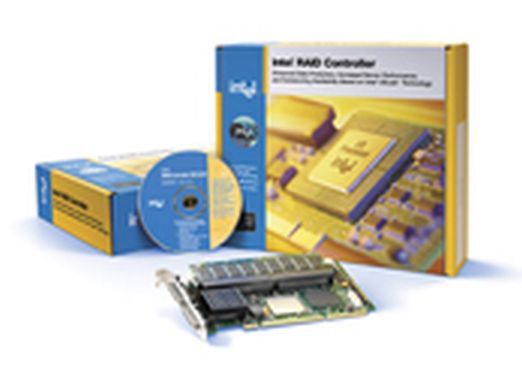
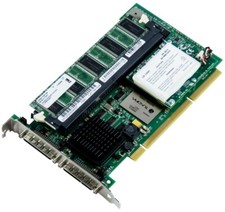
scsi4me01 Store Intel Server RAID Controller SRCU42X Dual-Channel Ultra320 PCI-X SCSI RAID Controller with 256MB Cache
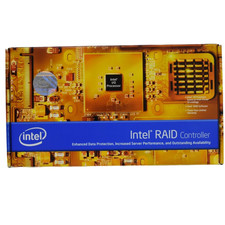
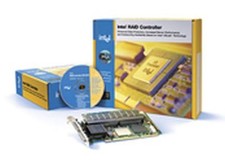
Brand New Retail Box
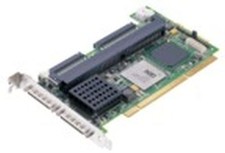
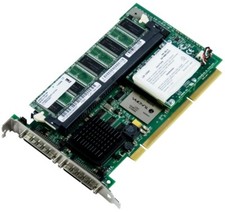
The Intel® RAID Controller SRCU42X is a PCI-X, dual-channel, Ultra320 SCSI RAID controller based on Intel® XScale™ technology
High-availability, high-capacity applications require a delicate blend of power and flexibility. Embedded systems, complex networking solutions, and other I/O-intensive applications demand a storage solution delivering generous throughput rates and data protection for high-availability server environments.That solution is the Intel® RAID Controller SRCU42X, which offers dual-channel Ultra320 SCSI technology along with the advanced I/O processing technology of the Intel® IOP321 I/O processor. This makes the RAID Controller SRCU42X one of the few RAID controllers in the industry to offer integrators the remarkably high throughput supported by a PCI-X interface as well as the performance, power efficiency, and flexibility of the Intel® XScale™ technology.With its 133MHz PCI-X interface, the RAID Controller SRCU42X achieves up to 1 GB per second maximum throughput. Its 400MHz Intel IOP321 processor offers a maximum throughput up to 1.6 GB per second and also supports up to 512MB of PC1600 ECC DDR SDRAM. In addition, a new software suite based on PCI-X simplifies configuration, diagnostics, and firmware updates and enables integrators to offer a full set of RAID options at entry-level price points.Intel RAID Tutorial: See our new tutorial to learn more about Intel RAID technology and try our New RAID Calculator.
Intel® RAID Controller SRCU42X Features & BenefitsFeaturesBenefitsIntel® IOP321 I/O processorOutstanding RAID performanceTwo-channel Ultra320 SCSI with support for up to 30 drivesHigh I/O bandwidth (320 MB/sec per SCSI channel) and I/O expandability64-bit/133MHz PCI-X interfaceRapid data-transfer rate, high availability and flexibilitySupport for RAID levels 0, 1, 5, 10, 50, and JBODFlexibility for optimizing performance and fault tolerance in a variety of solutions128MB DIMM included (supports 32MB-512MB of PC1600 ECC DDR SDRAM)Data integrityNew software suite: Intel® RAID BIOS Console, Intel® RAID Web Console, Intel® RAID Command Tool, Intel® RAID Diagnostics, Intel® RAID Flash UtilitiesEase of management, monitoring, reporting, and diagnosticsBackground initialization and instant availabilityImmediate accessibility to the host operating system, shorter build timeOnline capacity expansion and RAID-level migrationAvailability and flexibilityRemote event monitoring via SNMPManageability and availabilitySAF-TE-compliantReliability with hot-plug and hot-spare supportMicrosoft* Server Clustering Support3High availabilityOptional battery-backup unitData reliabilityController SRCU42X SpecificationsHardwareProcessorIntel® IOP321 I/O processor: based on Intel® XScale™ technology, with hardware XORMemorySupports 32MB-512MB of PC1600 ECC DDR SDRAM (ships with 128MB DIMM installed)PCI64-bit/133MHz PCI-X interface (PCI 2.2 and PCI-X 1.0 compliant), 3.3V adapter, backward compatible to 33MHz and 66MHz.SCSITwo-channel Ultra320 SCSI with support for up to 30 drives (15 per channel), each channel has one internal 68-pin connector (UHD LVD), and one external 68-pin connector (VHDC LVD)Form FactorHalf-length, full-height PCI: 175mm x 107mm (6.875" x 4.2")Status IndicatorsAudible alarm, LEDsSoftwareRAID Levels Supported0, 1, 5, 10, 50, and JBODScalabilityOnline RAID-level migration and capacity expansion without rebootConfiguration FlexibilityVariable data stripe size-configurable per array, configurable JBOD enclosure support, support for non-hard-disk-drive SCSI devices (for example, tape, CD-ROM), and read/write controller and disk cachingAvailabilityInstant availability and background initialization, automatic rebuild with private (dedicated) or pooled (global) hot-fix (spare) drives, hot-plug drive support, and drive roamingOperating-System SupportStandard ValidationMicrosoft* Windows 2003 Enterprise Server; Microsoft Windows 2000 Advanced Server, Service Pack 4; Microsoft Windows XP; Novell* NetWare* 6.0; SCO OpenServer* 5.0.7 from Caldera*; Red Hat* Linux 8.0; Red Hat Linux 9.0; Red Hat Linux Enterprise Server 2.1; Caldera UnixWare* 7.1.3; SuSE* Linux 8.1 Professional; SuSE Linux Enterprise Server 8