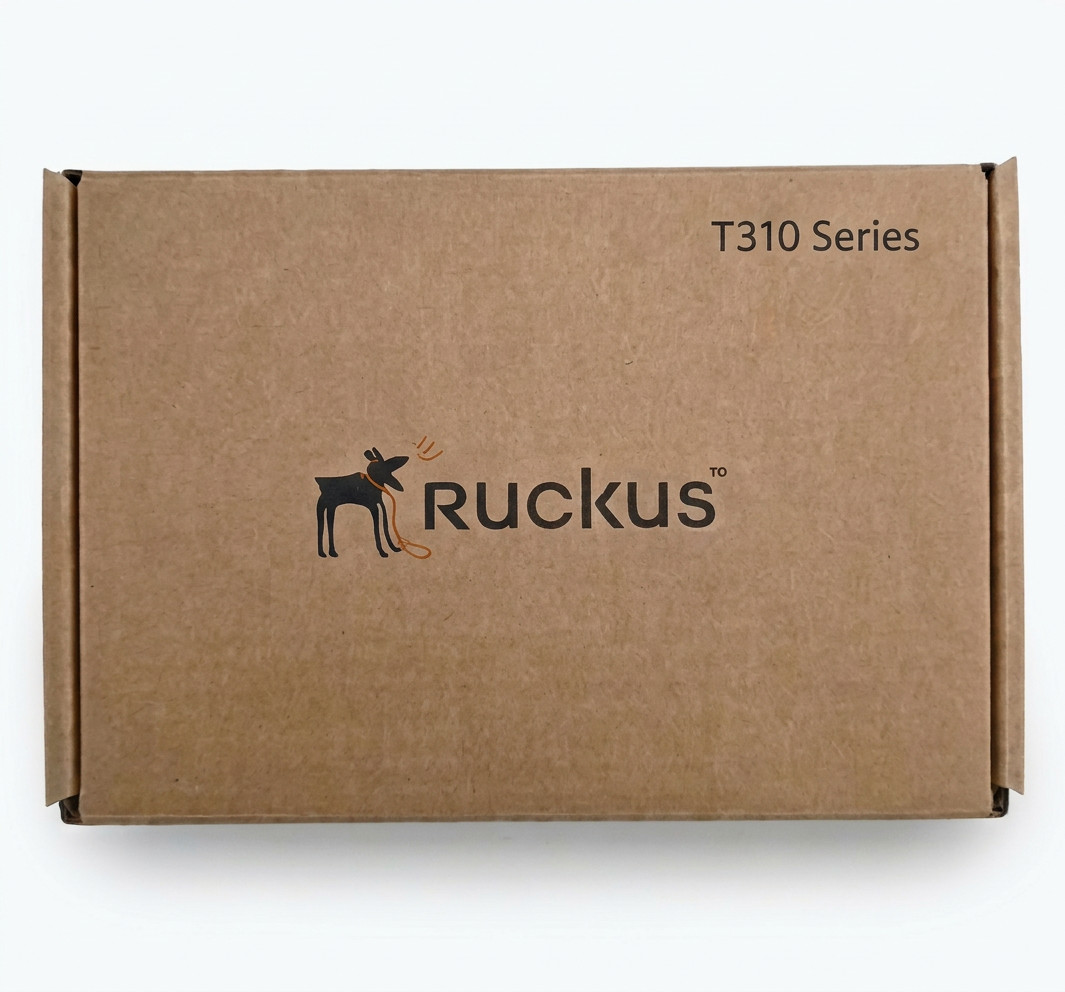
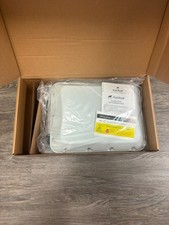
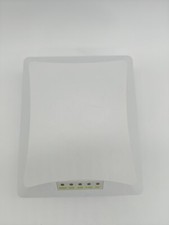
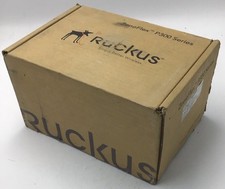
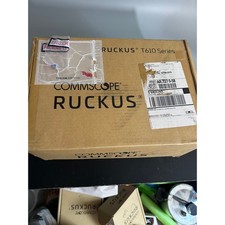
DESCRIPTIONBRAND NEW in box Ruckus Outdoor Wireless Access Point- model 901-T310-US40 - Ruckus T310d - T310 Series
BenefitsSIMPLICITY
Ruckus' Outdoor APs make Wi-Fi deployments extremely simple to deploy with one-touch technologies like SmartMesh™.
STUNNING WI-FI PERFORMANCE
Extends coverage with patented BeamFlex+™ adaptive antenna technology while mitigating interference by utilizing up to 64 directional antenna patterns.
GREAT OUTDOOR WI-FI
Experience high performance outdoor 802.11ac Wave 2 Wi-Fi with IP-67 weather proofing.
MULTIPLE MANAGEMENT OPTIONS
Manage the T310 Series with physical or virtual controller appliances.
SERVE MORE DEVICES
Connect more devices simultaneously with two MU-MIMO spatial streams and concurrent dual-band 2.4/5GHz radios while also enhancing non-Wave 2 device performance.
AUTOMATE OPTIMAL THROUGHPUT
ChannelFly™ dynamic channel technology uses machine learning to automatically find the least congested channels. You always get the highest throughput the band can support.
MORE THAN WI-FI
Support services beyond Wi-Fi with Ruckus IoT Suite, Cloudpath security and onboarding software, SPoT Wi-Fi locationing engine, and SCI network analytics.
Access Point Antenna Pattern
Ruckus' BeamFlex+ adaptive antennas allow the T310 AP to dynamically choose among a host of antenna patterns (up to 64 possible combinations) in real-time to establish the best possible connection with every device. This leads to:
- Better Wi-Fi coverage
- Reduced RF interference
Traditional omni-directional antennas, found in generic access points, oversaturate the environment by needlessly radiating RF signals in all directions. In contrast, the Ruckus BeamFlex+ adaptive antenna directs the radio signals per-device on a packet by-packet basis to optimize Wi-Fi coverage and capacity in real-time to support high device density environments. BeamFlex+ operates without the need for device response and hence can benefit even devices using legacy standards.
Figure 1.Example of Beamflex+ patternFigure 2.T310d 2.4GHz Azimuth
Antenna PatternsFigure 3.T310d 5GHz Azimuth
Antenna PatternsFigure 4.T310d 2.4GHz Elevation
Antenna PatternsFigure 5.T310d 5GHz Elevation
Antenna Patterns
Note: The outer trace represents the composite RF footprint of all possible BeamFlex+ antenna patterns, while the inner trace represents one BeamFlex+ antenna pattern within the composite outer trace.
WI-FIWi-Fi Standards
- IEEE 802.11a/b/g/n/ac Wave 2
Supported Rates
- 802.11ac: 6.5 to 867 Mbps (MCS0 to MCS9, NSS=1to2 for VHT20/40/80
- 802.11n: 6.5 Mbps to 300Mbps (MCS0 to MCS15)
- 802.11a/g: 54, 48, 36, 24, 18, 12, 9, 6Mbps
- 802.11b: 11, 5.5, 2 and 1 Mbps
Supported Channels
- 2.4GHz: 1-13
- 5GHz: 36-64, 100-144, 149-165
MIMO
Spatial Streams
Radio Chains and Streams
Channelization
Security
- WPA-PSK, WPA-TKIP, WPA2-Personal, WPA2-Enterprise, WPA3-Personal, WPA3-Enterprise, AES, 802.11i, Dynamic PSK
- WIPS/WIDS
Other Wi-Fi Features
- WMM, Power Save, Tx Beamforming, LDPC, STBC, 802.11r/k/v
- Hotspot, Hotspot 2.0
- Captive Portal
- BeamFlex+ adaptive antennas with polarization diversity
Antenna Gain (max)
Peak Transmit Power (aggregate across MIMO chains)
BeamFlex+ SINR Transmit Power Gain*
BeamFlex+ SINR Receive Power Gain*
Minimum Receive Sensitivity1
Frequency Bands
- ISM (2.4-2.484GHz)
- U-NII-1 (5.15-5.25GHz)
- U-NII-2A (5.25-5.35GHz)
- U-NII-2C (5.47-5.725GHz)
- U-NII-3 (5.725-5.85GHz)
2.4GHZ RECEIVE RECEIVE TX POWER TARGETRatePout (dBm)MCS0 HT2023MCS7 HT2018MCS0 HT4022MCS7 HT40185GHZ TX POWER TARGETRatePout (dBm)MCS0 VHT2024MCS7 VHT2020MCS9 VHT2018MCS0 VHT40, VHT8023MCS7 VHT40, VHT8020MCS9 VHT40, VHT8018PERFORMANCE AND CAPACITYPeak PHY Rates
- 2.4GHz: 300Mbps
5GHz: 867Mbps
Client Capacity
SSID
RUCKUS RADIO MANAGEMENTAntenna Optimization
- BeamFlex+
- Polarization Diversity with Maximal Ratio Combining (PD-MRC)
Wi-Fi Channel Management
- ChannelFly
- Background Scan Based
Client Density Management
- Adaptive Band Balancing
- Client Load Balancing
- Airtime Fairness
- Airtime-based WLAN Prioritization
SmartCast Quality of Service
- QoS-based scheduling
- Directed Multicast
- L2/L3/L4 ACLs
Mobility
Diagnostic Tools
- Spectrum Analysis
- SmartZone
- ZoneDirector
- Unleashed
- Cloud
- Standalone
Mesh
- SmartMesh™ wireless meshing technology. Self-healing Mesh
IP
VLAN
- 802.1Q (1 per BSSID or dynamic per use based on RADIUS)
- VLAN Pooling
- Port-based
802.1x
- Authenticator & Supplicant
Tunnel
Policy Management Tools
- Application Recognition and Control
- Access Control Lists
- Device Fingerprinting
- Rate Limiting
IoT Capbale
PHYSICAL INTERFACEST310cT310dT310sT310nEthernet1 x 1GbE port, RJ-45USB—1 USB 2.0 port, Type ADC Power—12V DC Terminal Block (8V - 20V)PHYSICAL Size
18.1(L) x 15.1(W) x 7.9 (H) cm
7.1(L) x 5.9(W) x 3.1(H) in.
26(L) x 20.9(W) x 10.3(H) cm
10.2(L) x 8.2(W) x 4.1(H) in.
Weight1kg (2.1lbs)1.65kg (3.6lbs)Ingress ProtectionIP-67Mounting
Wall, Drop ceiling, Desk
Pole Mount Diameter 1" to 2.5"
Operating Temperature-20ºC -(4ºF) to 65ºC (149ºF)-40ºC -(-40ºF) to 65ºC (149ºF)Operating HumidityUp to 95%, non-condensingWind SurvivabilityUp to 266km/h (165 mph)POWER2T310cT310dT310sT310nPower SupplyMax Power Consumption (includes USB power)802.3af/at AND COMPLIANCEWi-Fi Alliance3
- Wi-Fi CERTIFIED™ a, b, g, n, ac
- Wi-Fi Enhanced Open™
- WPA2™ - Personal
- WPA2™ - Enterprise
- WPA3™ - Personal
- WPA™ - Enterprise
- Wi-Fi Agile Multiband™
- Wi-Fi Optimized Connectivity™
- Wi-Fi Vantage™
- WMM®
- Passpoint®
Standards Compliance4
- EN 60950-1 Safety
- EN 60601-1-2 Medical
- EN 61000-4-2/3/5 Immunity
- EN 50121-1 Railway EMC
- EN 50121-4 Railway Immunity
- IEC 61373 Railway Shock & Vibration
- UL 2043 Plenum
- EN 62311 Human Safety/RF Exposure
- WEEE & RoHS
- ISTA 2A Transportation
SOFTWARE AND SERVICESLocation Based Services
Network Analytics
- SmartCell Insight (SCI)
- RUCKUS Analytics
Security and Policy